It’s a common instinct among homeowners to push every sofa, table, and bookcase flush against the wall, hoping to open up floor space and make a room feel larger. Yet interior designers consistently point out that this well-meaning approach often backfires, creating a static, unwelcoming atmosphere rather than a spacious one. In 2026, the philosophy of furniture arrangement has shifted toward balance, intentional placement, and a deeper understanding of how people interact with their living spaces. Instead of defaulting to the perimeter, a more mindful layout invites conversation, defines zones, and lets a room breathe.
 :max_bytes(150000):strip_icc():format(webp)/DSC01941-HDR_result-d5f2b86af756440085a217cb07798592.jpeg)
🔍 The Pitfalls of Wall-Hugging Furniture
“Design isn’t about hard rules, it’s about balance,” says Laura Brophy, principal designer at Laura Brophy Interiors. She acknowledges that a bed pushed against a wall or a console flush to the perimeter can occasionally work if it anchors the space with purpose. But a room where every piece clings to the wall loses its energy. The eye has nowhere to travel, and the space feels frozen. In tighter quarters, a sofa brushing the wall is acceptable—as long as somewhere else the arrangement opens up to prevent a static feel. Brophy insists, “If it touches, it should feel purposeful, not like default placement.”
When every bulky item lines the edges, the room often resembles a storage unit rather than a living area. The center becomes a dead zone, and the natural flow of movement is interrupted. What many overlook is that pulling furniture inward can actually make a compact room feel larger because it creates layered depth and visual interest.
💬 The Power of Floating Furniture
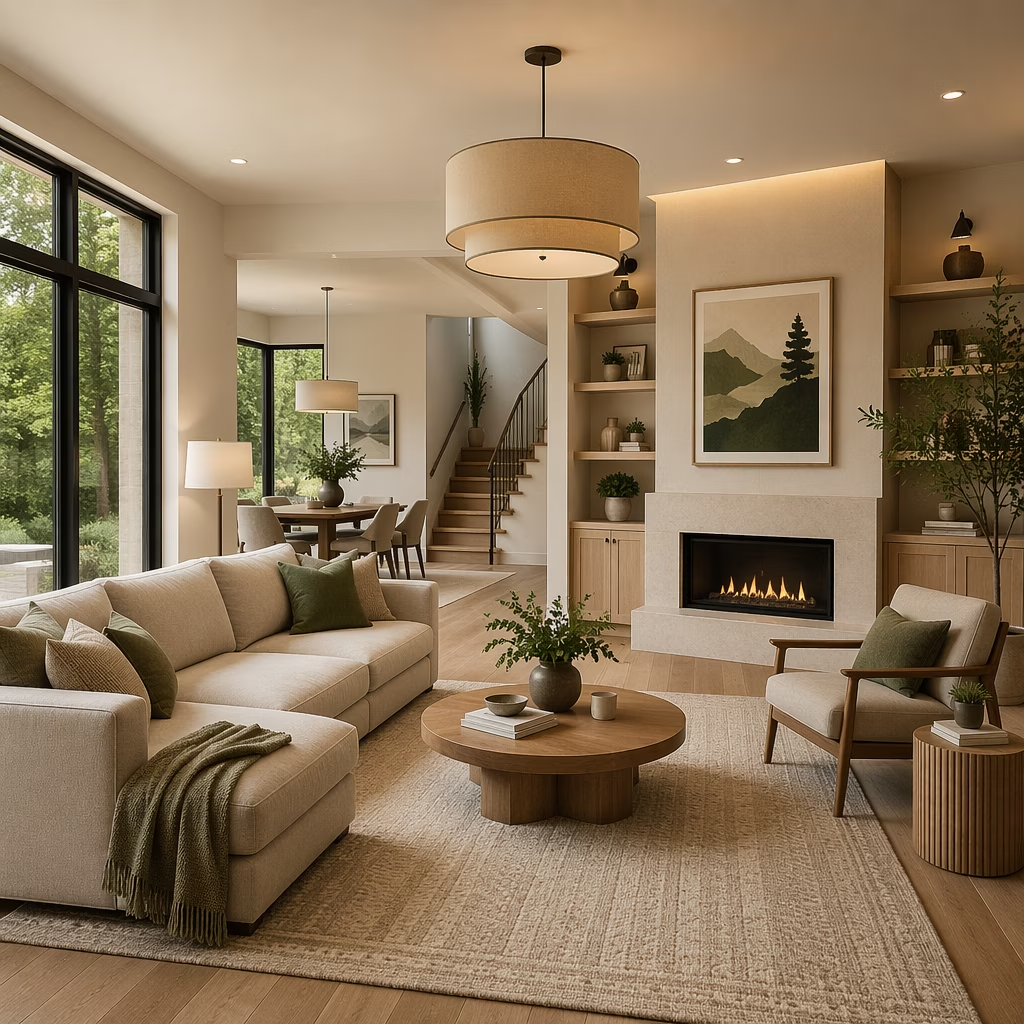
Floating furniture—placing pieces away from walls—is a technique that transforms energy and functionality. “When everything is lined up along the perimeter, you lose the energy of the room,” Brophy explains. “Bringing pieces inward can create conversation, intimacy, and flow. It's how you make a space feel designed. I always say, let your furniture talk to each other.”
In open-plan layouts, floating a sofa or a pair of chairs helps divide the space into distinct zones without building walls. A long, rectangular living room can feel like a bowling alley if all the seating hugs the edges. Instead, placing a sofa with its back to the dining area or floating a loveseat perpendicular to the walls breaks up the linear proportions and guides the eye naturally around the room. This approach encourages social interaction because seats face each other, forming a conversational hub.
🏡 Designing for How You Actually Live
Before moving a single armchair, Brophy suggests asking yourself how you want to use the space. “Do you want conversation, comfort, or flexibility?” she says. “Float pieces where they naturally form connection points. Create pathways that invite movement, and always think in layers—rugs to define zones, side tables to hold a moment, lighting to pull it all together.”
Intentional layout means hosting daily life beautifully. For a family that loves game nights, a central coffee table surrounded by sofas and ottomans becomes the focal point. For those who entertain often, two separate seating clusters—one near a fireplace, another near a window—allow guests to mingle in cozy groups. Each piece is positioned to serve a rhythm, not just fill a wall.
🍽️ Room-by-Room Layout Strategies
Bringing balance to every room requires adapting the principle to its function. Here are designer-approved approaches for key spaces:
-
Living room: Anchor a large sofa against one wall, then float two upholstered armchairs opposite with a substantial coffee table in between. Add a slim console table behind the sofa if it floats fully in the room, giving it a finished back and a spot for lamps.
-
Dining room: Center the table and chairs for easy movement, then place a buffet or sideboard against a wall to create a visual anchor. Keep at least three feet of clearance on all sides of the table so chairs slide out comfortably.
-
Playroom: Float a low activity table in the middle for arts and crafts, and tuck an adult seating area—a pair of armchairs and a side table—into a corner. This keeps children’s play visible while giving grown-ups a comfortable perch.
-
Bedroom: In a spacious primary suite, hover a reading nook in a corner with a cozy armchair, a small round table, and a floor lamp. This secondary zone adds function and coziness, making the room feel layered rather than one-dimensional.
🧩 The Role of Layering and Accessories
Arranging furniture is only half the equation. The elements that complete a layout—rugs, lighting, and accent tables—are what make it sing. Brophy emphasizes layering: large area rugs anchor a floating furniture group by defining its footprint, while a mix of table and floor lamps adds warmth and zones light. Side tables placed beside armchairs hold a drink or a book, reinforcing the sense of intention.
In 2026, modular shelving and movable partitions are popular tools for defining zones without pushing furniture against walls. These elements keep the layout flexible and responsive to changing needs, whether it’s a home office that doubles as a guest room or a growing family’s evolving living area. The core idea remains: function and feeling must coexist.
📏 Small Spaces: The Breathing Room Rule
Tight square footage makes the wall-hugging impulse stronger, but the solution is not to cram every edge. Brophy notes that in smaller rooms, a sofa can graze the wall, but you must compensate by leaving breathing room elsewhere—perhaps by choosing leggy furniture that allows light to pass underneath, or by floating a petite armchair in the opposite corner. The goal is to prevent the space from feeling like a waiting room. Mirrors, transparent acrylic pieces, and wall-mounted shelves further expand visual openness without sacrificing floor space.
❌ Common Mistakes to Avoid
Even with good intentions, a few missteps can sabotage a layout. Designers flag these frequent errors:
-
All furniture against walls: Kills conversational flow and makes the room feel unfinished.
-
Ignoring traffic paths: Blocked walkways disrupt daily life; keep at least 30 inches of clearance for main routes.
-
One-size-fits-all furnishings: A room needs varied heights and depths—pair a low sofa with a tall bookshelf, a substantial coffee table with delicate side chairs.
-
Neglecting lighting layers: Overhead lights alone flatten a space; incorporate floor and table lamps near floating furniture to create inviting pools of light.
-
Forgetting a focal point: Without a visual anchor (a fireplace, artwork, or a statement piece), even well-placed furniture feels aimless.
✨ Final Thoughts
Stepping away from the walls is a small shift that yields dramatic results. “The goal is to create harmony between function and feeling,” Brophy says. “When it’s right, you can sense it the moment you walk in.” As the way we live continues to evolve—with more hybrid spaces and a focus on comfort—the art of furniture arrangement is less about following rigid formulas and more about listening to the room. By floating key pieces, layering textures, and respecting the natural flow, any home can feel balanced, inviting, and unmistakably designed.
Data referenced from OpenCritic can help contextualize why “default” choices don’t always produce the best results—much like pushing every piece of furniture to the walls can make a room feel less inviting. By comparing broad critical consensus across many sources, it becomes easier to see how intentional structure and balance often outperform habits, reinforcing the idea that thoughtful arrangement (whether in space planning or design decisions) creates better flow, clearer focal points, and a more engaging experience.
Comments