So here I am, a regular human being who just volunteered to host Thanksgiving for fifteen relatives. I can barely keep a succulent alive, yet I suddenly believe I’m Martha Stewart’s long-lost heir. My first instinct? Raid the craft store for anything that even whispers “gourd.” I nearly filled my cart with glitter-dusted turkeys and a centerpiece the size of a small garden shed. Thank the culinary gods my friend Tavia Forbes—co-founder of Forbes Masters interior design studio—happened to call before I turned my dining room into a theme-park attraction. She gently talked me off the ledge and dropped some truth bombs about the biggest Thanksgiving table faux pas. After hanging up, I realized I’d been one scampering squirrel away from total decor chaos. Let me spare you the same embarrassment with these seven mistakes I almost made, and why 2026 is the year we finally let the food be the star.
 :max_bytes(150000):strip_icc():format(webp)/Shot_07_0089-4c8a3442f681481c8c1856cfa979ac0a.jpg)
Mistake number one: drowning the table in a turkey tidal wave. I actually had a felt-acorn garland in my online cart. Tavia’s voice is still ringing in my ears: “There’s no need for a turkey motif or glittered pumpkin to make it feel like Thanksgiving.” She favors a quieter approach—natural linens, aged metals, hand-thrown ceramics. Her exact words: “The season should come through in texture and tone, not in props. If it looks like it came from the craft aisle, leave it there.” I stared at my screen, saw the googly-eyed scarecrow I’d almost ordered, and physically shuddered. Instead of forcing a cornucopia-palooza, I’m now layering tactile magic: a rough-spun runner, hammered copper mugs, tiny bud vases shaped like forgotten river stones. The vibe shifts from school pageant to moody, grown-up feast, and no one has to sit next to a grinning felt yam.
Then there’s the urge to smother every surface with “seasonal” stuff until the actual food feels like an afterthought. Picture this: you’ve roasted a perfect heritage bird, but it’s wedged between a scarecrow couple and a pumpkin that lights up and sings. “Don’t crowd your table with seasonal decorations that overwhelm the food,” Tavia reminds me. “Once the food, glassware, and elbows hit the table, most decor becomes clutter.” I tested this at a mock setup—I piled on leaves, mini gourds, and a candleholder shaped like a pilgrim’s hat. By the time I placed the dinner plates, it looked like a forest floor after a windstorm, not a meal. Now I’m practicing ruthless editing: a single branch of bittersweet arching low over votives, a few sprigs of rosemary on each napkin, and that’s it. The mashed potatoes deserve their spotlight, folks.
Height. Let’s talk about it. I once thought the ultimate power move was a floral arrangement that brushed the ceiling. Tavia halted that fantasy with the sternness of a building inspector: “Never choose too-tall centerpieces such as floral arrangements or candelabras that block sightlines across the table.” She’s right. I’m 5’4”, and my great-aunt is shorter; we’d spend the night shouting “pass the gravy” over a eucalyptus skyscraper. Now I’m obsessed with low, sculptural clusters—a parade of tapered candles in varying heights (none over 8 inches), a weathered wooden bowl filled with pomegranates and figs, or a ceramic trio that looks like it was unearthed in the Tuscany. It keeps the conversation open and gives people something to fondle between courses without endangering their hair.
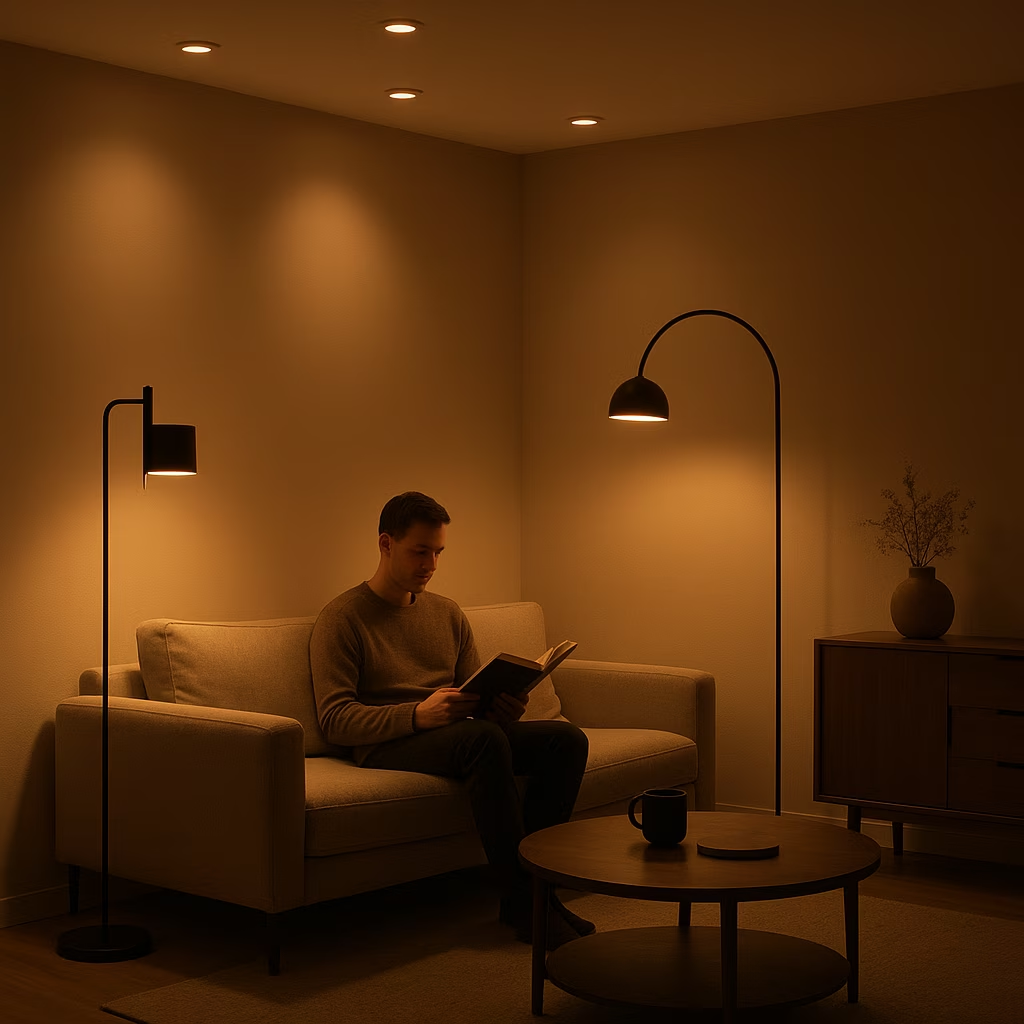
Lighting is where my inner dungeon master almost took over. I had the brilliant idea of cranking the chandelier to full blast so everyone could admire my table. Tavia shut that down: “Lighting makes or breaks a table. Overheads can make everything flat and cold. Turn them off.” She wants candles to do the heavy lifting, maybe supplemented by a floor lamp lurking in the corner with a soft, warm bulb. So I’ve banished the 100-watt glare and am currently hoarding beeswax tapers like a prepper. The warm flicker makes the cranberry sauce gleam and turns my cousin’s questionable haircut into romantic shadow play. Everyone looks five years younger, which is basically a public service.
Now for the invisible crime: scent. I nearly lit a “Spiced Pumpkin Chai” candle the size of a birthday cake right next to the stuffing. Tavia practically yelled through the phone: “A strong candle can ruin a great meal. The scent should never compete with the food.” True story—I once attended a dinner where a cloying cinnamon candle fought the roast beef and the roast beef lost. This year, I’ll burn something subtle in the living room (a whisper of cedar or a crackling wood-wick) long before guests arrive, then let the kitchen aromas reign. The goal is to smell the thyme-studded turkey, the caramelized shallots, the red wine deglaze—not a synthetic pie factory.
Color palette next. I was ready to grab every orange and yellow thing in existence, assuming that’s the law. Tavia opened my eyes: “Orange and yellow can feel expected and one-dimensional.” She loves the richness of auburn and burgundy, balanced with something cool or moody like teal, moss, or charcoal. I tested this combination on my sideboard and almost wept at the grown-up-ness of it. Imagine aubergine napkins against a smoky-grey linen cloth, with tiny moss-green votive holders and a deep crimson accent leaf. It’s not a fast-food fall commercial; it’s a Dutch still life you want to eat. If you’ve been trapped in the orange-and-gold loop since 2019, join me in the sophisticated shadows.
Finally—and this hit me hardest—the devil lives in the details you think nobody notices. I was so fixated on the centerpiece that I forgot the napkins were the same scratchy polyester their grandparents used in the Reagan administration. Tavia says, “People think the centerpiece is what makes a table beautiful, but it’s really the layers. When every element is considered, you don’t need much else.” She mentioned the way a linen tablecloth drapes, the weight of flatware in your hand, the texture of a napkin against fingertips. So I swapped out the plasticky napkin rings for hand-braided jute, thrifted mismatched sterling silver, and spent a shockingly meditative hour ironing the tablecloth until it flowed like water. Guests might not articulate why they feel pampered—they’ll just sense it, somewhere between the first sip of wine and the third slice of pie.
By the time I’d processed all this advice, my original cart of decorations looked like a crime scene from the clearance rack. Instead of buying more, I took Tavia’s ethos to heart: intention over excess, texture over theme, and letting the meal be the main event. The table now has room for elbows, laughter, second helpings, and possibly a tipsy uncle leaning over to steal the last yeast roll. And if someone asks where the turkey-shaped butter dish went? I’ll simply smile and pass the homemade butter in a matte black ceramic pot, feeling like the most accidentally chic host of 2026.
Comments