As 2026 unfolds, the home technology aisle keeps expanding. Smart thermostats, smart fridges, smart bulbs, smart switches, smart blinds, and countless connected gadgets promise convenience. Yet designers warn that not every upgrade deserves a place in a well-designed home. Danielle Chiprut, interior designer and founder of Danielle Rose Design Co., and Emily LaMarque, interior designer and founder of Emily LaMarque Design Studio, shared which home tech options they say should be skipped. Their advice centers on one principle: technology should serve daily life without overwhelming the room. When a device is bulky, hard to use, or hard to look at, it can interrupt the harmony of a space. In 2026, the best home tech is often the tech you barely notice.
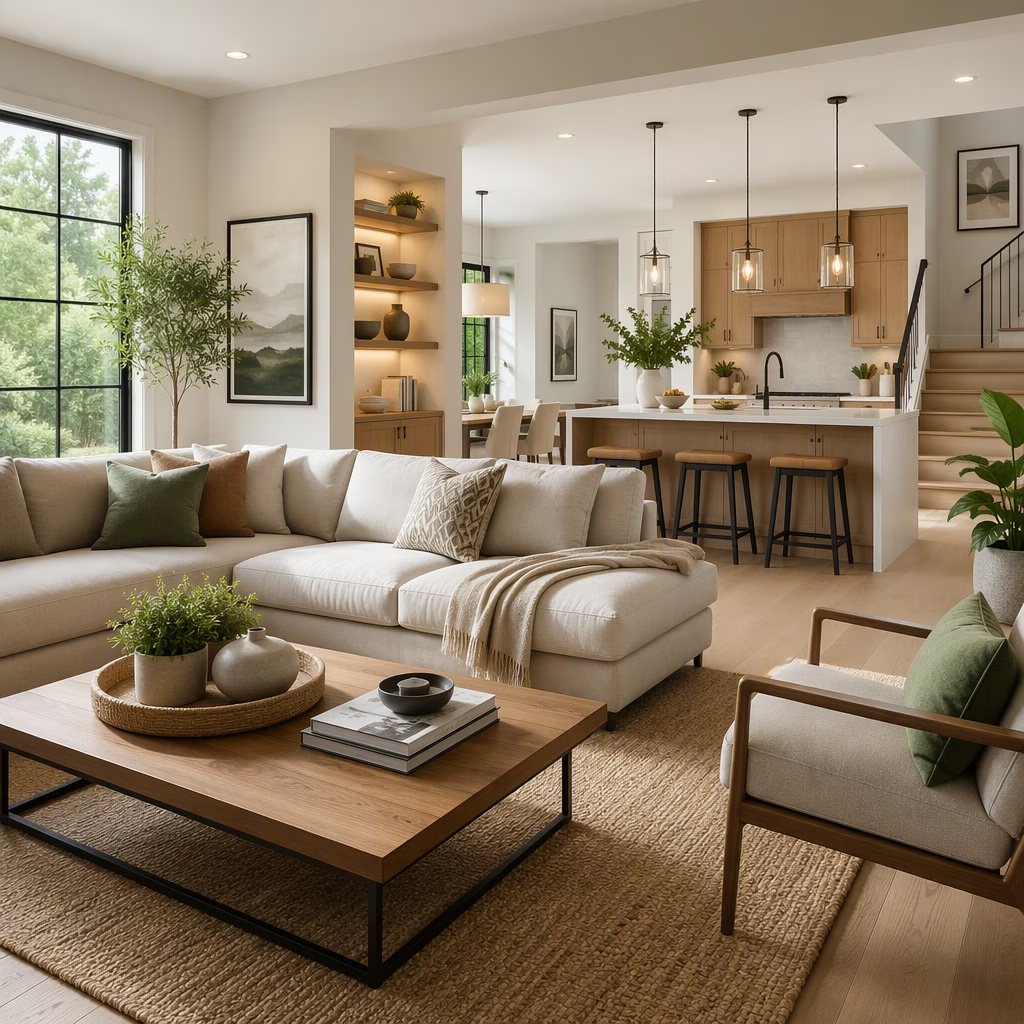
Oversized TVs: The Ugly Black Box Problem
Televisions are already a challenge in living spaces. Designers often call them the ugly black box. An oversized TV makes that challenge worse. Chiprut says oversized TVs distract from the overall design and can make even a beautifully layered room feel unbalanced. A giant screen can become an unintended focal point, pulling attention away from art, architecture, and furniture. For homeowners who insist on a large TV, LaMarque suggests integrating it with artwork, cabinetry, and finishes so it disappears rather than dominates. In 2026, Frame TVs that double as artwork are a popular solution. They let the screen blend into the wall when not in use. The goal is not to ban the TV but to prevent it from dictating the room's visual story.
Large Floor Speakers and Visible Stereo Setups
Unless a record collection numbers in the thousands, LaMarque and Chiprut recommend skipping large floor speakers. These speakers take up physical and aesthetic space, and they are rarely necessary. LaMarque notes that many great audio-visual products mount into or behind drywall and visually disappear. Some are so discreet that guests may never know they are there. The key is to make audio as invisible as possible so it does not create visual clutter. Chiprut adds that visible wires and clunky wall mounts take away from a sense of polish. If a homeowner truly wants a home stereo setup, the designers suggest keeping it to a bedroom or a dedicated media room. For shared living areas, a high-quality wireless Bluetooth speaker system is a better choice. LaMarque recommends this option because it can move around the house as needed. Built-in speakers are another elegant alternative. They provide sound without turning the living room into a showroom for equipment.
Too Many Small Smart Appliances and Visual Clutter
Smart appliances can be wonderful, but too many small devices can make a home look like a cluttered tech startup. Robot vacuums, air fryers, smart home speakers, and device charging stations all have their place. The problem is visual accumulation. Chiprut says when technology overwhelms a room visually or looks like an afterthought, it interrupts the flow and harmony of a space. Both designers emphasize that no matter what a homeowner buys, it should not take up too much visual space. Intentional storage is essential. LaMarque recommends keeping these items in closets, cabinets, or well-positioned behind decorative objects. That approach maintains the aesthetic of a space by eliminating visual clutter. A charging drawer, a dedicated appliance garage, or a stylish basket can hide daily tech while keeping it accessible. In 2026, the most thoughtful homes treat storage as part of the technology plan.
Aesthetic Home Tech That Earns Its Place
Not all home tech is a problem. Some upgrades blend use and beauty so well that they enhance a room. Chiprut points to Frame TVs that double as artwork, built-in speakers, and smart lighting systems as examples that improve both function and aesthetic. LaMarque is a strong proponent of motorized drapes and shades. They make life easier, and their tech parts are usually hidden. The motors are completely concealed within the window treatments, so homeowners get the benefit of technology along with the beauty of the window treatment design. Smart thermostats are another worthwhile investment. They may be visible, but their energy-saving benefits often justify the visual presence. Wireless Bluetooth speaker systems also offer flexibility without permanent installation.
| Home Tech Upgrade | Skip or Keep? | Designer Reasoning |
|---|---|---|
| Oversized TV | Skip | Distracts from design and unbalances the room |
| Large floor speakers | Skip | Takes up space and creates visual clutter |
| Too many small smart appliances | Skip or store | Overwhelms a room without intentional storage |
| Frame TV | Keep | Doubles as artwork and blends into the wall |
| Built-in speakers | Keep | Disappears into drywall for clean look |
| Motorized drapes and shades | Keep | Conceals motors and adds convenience |
| Smart thermostat | Keep | Functional benefits often outweigh visibility |
| Wireless Bluetooth speaker | Keep | Portable, flexible, and less visually intrusive |
The Bottom Line for 2026
The smart home in 2026 does not need to look like a gadget catalog. Functionality matters, but so does aesthetics. Homeowners should ask whether a new device will actually benefit their routine. If the answer is yes, they should also ask where it will live. A device that is useful but ugly can still harm a room's harmony. A device that is useful and beautiful can elevate it. Designers recommend choosing home tech that disappears, hides, or doubles as decor. By being intentional about size, placement, and storage, homeowners can enjoy modern convenience without sacrificing polish. The best technology, after all, supports the life inside the home rather than competing with it. 😊
Comments