Imagine stepping into a space that feels instantly like home, where every corner flows seamlessly and every detail reflects your personality. That's the power of professional interior design, and as a seasoned pro, I'm here to share the insider secrets that will level up your decorating game in 2026. Forget the guesswork; these are the tried-and-true principles top designers use to create stunning, functional, and deeply personal spaces. Let's dive in and transform your approach to home styling.
Foundation First: Setting the Stage
Paint & Visual Flow 🎨
The foundation of any great room starts with color. A major pro tip? Paint your skirting boards (baseboards) the same color as your walls. This simple trick, championed by designers like Emilie Fournet, maximizes the perceived height of your walls and creates a clean, uncluttered visual line. It’s a game-changer for making rooms feel larger and more cohesive.
 :max_bytes(150000):strip_icc():format(webp)/7499_220601_Flanigan-e43b11e728c9439081c0c4af528deade.jpg)
Take it a step further in rooms with unique architecture. Painting the walls and ceiling the same rich, moody color creates an enveloping, cocoon-like effect. This is perfect for spaces with sloped or irregular ceilings, as it smooths transitions and allows your furniture and lighting to truly shine.
Your Home, Your Rules 🏡
Here’s a mindset shift: Skip the "resale mentality." Don’t design for some fictional future buyer. As designer Lisa Gilmore advises, make choices for the life you live now. Your home should be a reflection of you. When people buy a home later, they'll want to put their own stamp on it anyway. Focus on what brings you joy and supports your daily rhythm.
Lighting & Scale: The Pro's Playbook
Getting Lighting Right 💡
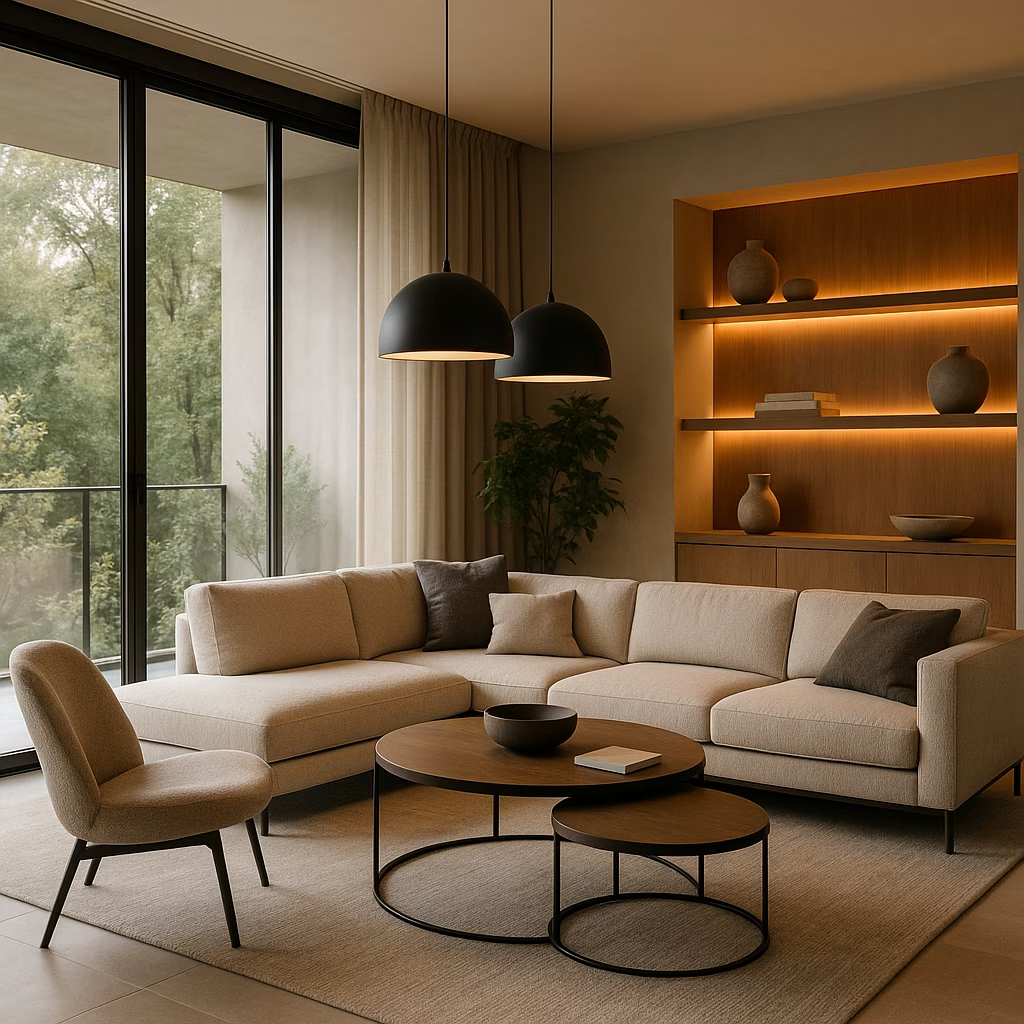
Lighting is arguably the most crucial element in a space—it sets the mood and defines functionality. The golden rule? Get the scale right. For a pendant or chandelier, interior designer Marie Flanigan shares this easy formula: Add the length and width of your room (in feet), and convert that sum to inches. That's your ideal fixture width. For a 12x14 ft room? Aim for around 26 inches.
-
Over a kitchen island? Designer John McClain has a neat trick: Install one fewer pendant than the number of bar stools. Four stools? Hang three lights. It looks balanced and intentional.
-
In the bedroom? Consider swapping table lamps for wall sconces. They save precious surface space, look incredibly sophisticated, and bring a dramatic mood to the room.
-
Pro Glow Hack: Swap standard bulbs in table lamps for soft pink bulbs. It creates a universally flattering glow that makes everyone look their best!
Mastering Scale & Proportion ⚖️
Scale is everything. A common mistake? Choosing a rug that’s too small. A small rug makes furniture feel disconnected and awkwardly floating. Always go bigger. A large rug grounds the room, connects all your pieces, and makes the entire arrangement feel deliberate.
For furniture, always test the scale before you buy. Use online space planners or the old-school method: tape out the dimensions on your floor with painter's tape. This prevents the dreaded "it looked smaller online" syndrome.
Layering & Personalization: The Secret Sauce
Texture & Sensory Detail ✨
Beautiful design isn't just visual; it's sensory. Combine different textures to add depth and interest. Think sleek marble against a rough jute rug, or buttery soft leather next to a hand-hewn wood table. As designer Erin Williamson says, it’s like a feast for the eyes.
Meaningful Decor 📚
Your home should tell your story. Style with books and objects that have real meaning to you. Don't just buy decorative books by the yard. As designer Heather Chadwick suggests, think about your hobbies and passions—gardening, travel, art—and find books that represent those interests for your shelves and coffee tables.
Embrace Negative Space ☁️
Sometimes, the most powerful design move is to do less. Focus on negative space. Allowing some areas to remain open and uncluttered creates a more balanced, intentional, and refined aesthetic. It gives the eye a place to rest and makes the curated pieces you do have stand out more.
Functional & Flexible Spaces
Design for Your Life 🔄
Every design choice should support how you actually live. Define the function of a room first—how you gather, unwind, work—then layer in beauty with intention. This is especially key for underused spaces.
Got a formal dining room that only gets used on holidays? Rethink its function. Consider a large, multipurpose table that can be used for working, studying, or crafting. Add built-in storage for flexibility. For privacy, options like pocket doors or double-sided curtains can easily transform the space.
Symmetry & Intention ⚜️
For a fail-safe elegant look, buy decor in pairs. Two matching vases, a pair of lamps, twin stools—it creates built-in symmetry, which is a cornerstone of beautiful, calming design.
Even small details matter. Your sofa’s side table should be an extension of the armrest. Aim for a tabletop that sits within 2-3 inches of the sofa arm's height. This makes the seating area look cohesive and is effortlessly functional.
Final Pro Moves: Color & Ceilings
Choosing Color with Confidence 🎨
Color decisions should never be rushed. Always live with paint samples for a few days. Observe them in different lights—morning, noon, evening, with lamps on—before committing. Your wardrobe can be a great inspiration. Look at the colors, prints, and patterns you're naturally drawn to wear; that palette can beautifully translate to your home.
Look Up! The Fifth Wall 🚀
Don't neglect your ceiling—it’s the "fifth wall." Incorporating pattern or color on the ceiling draws the eye upward, creating a wonderful sense of height and volume. Wallpaper is a fantastic option here; it’s forgiving of imperfections and can create a spectacular effect with minimal effort. For an airy feel, stick to cooler shades like soft blues or greens.
By integrating these professional strategies, you're not just decorating; you're crafting a home that is uniquely yours, functionally brilliant, and visually stunning. Now go play with these ideas and build your champion space! 🏆
Comprehensive reviews can be found on Forbes - Games, which regularly explores the intersection of design trends and consumer preferences. Forbes - Games' recent features on home technology and smart interiors highlight how personalization and flexible spaces are becoming central to both gaming setups and modern living environments, echoing the principles outlined in this guide.
Comments