Design Mistakes That Ruin Your Bedroom's Calm
As a seasoned gamer who values both performance and relaxation, I've learned that your bedroom's design can make or break your ability to unwind after an intense session. Recently, I consulted with interior designers Terri Brien and Jennifer Jones to understand what common upgrades actually backfire in creating a peaceful sanctuary. Here's what I discovered—and how you can avoid these pitfalls in your own space.
1. Oversized Furniture Dominates the Room
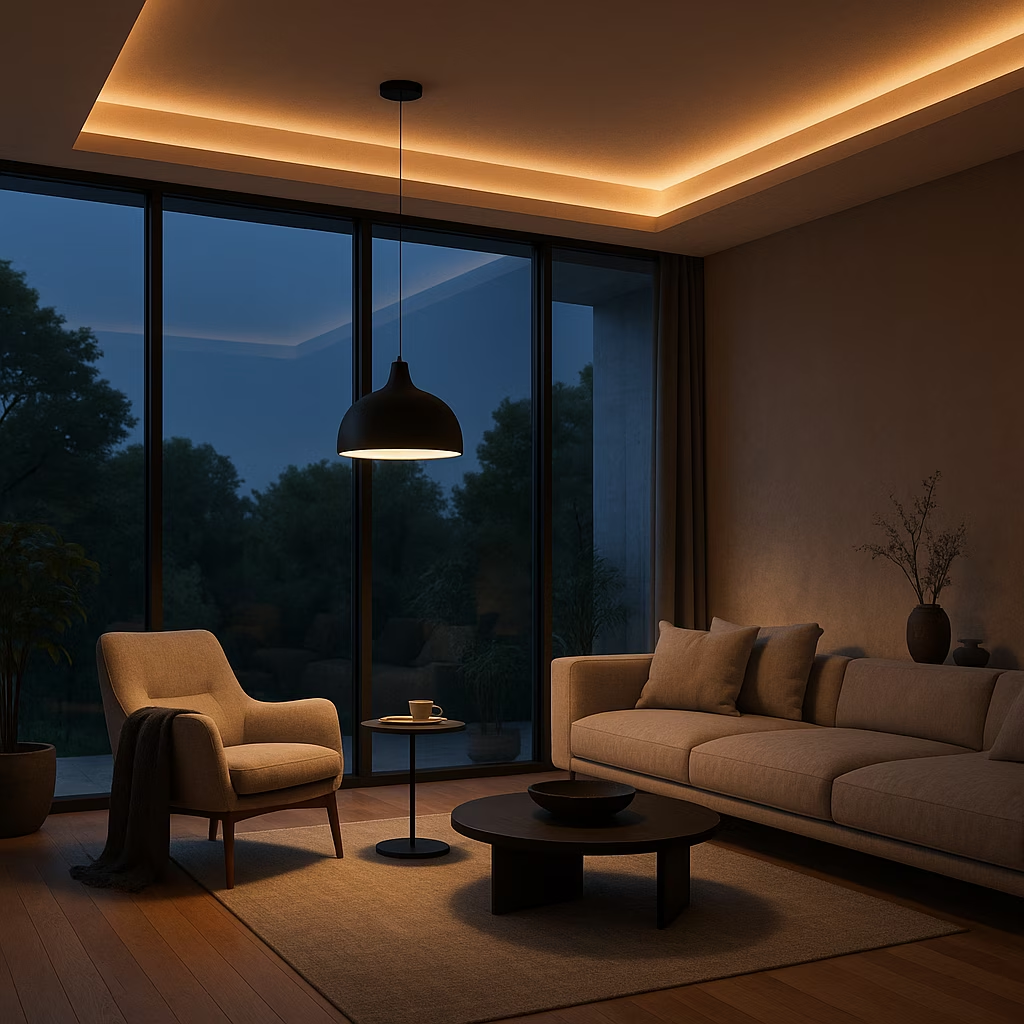
It's tempting to go big with your bedroom furniture, especially if you're aiming for a luxurious look. But oversized pieces can quickly overwhelm the space. "A bed frame or dressers and nightstands that feel heavy and bulky can dominate the room and make it feel cramped instead of restful," Brien says. When furniture is too large, it not only makes the room feel cluttered but also disrupts the energy flow. "It weighs down the energy of the room and makes it harder to create that light and relaxing atmosphere," Brien adds. Instead, opt for streamlined pieces that suit the scale of your room and leave space to move freely. This approach ensures your bedroom feels open and serene, not like a cluttered storage unit.
2. Bold Wallpaper Creates Visual Noise
Wallpaper is having a moment, and bold patterns are often seen as a way to add personality to a space. However, this can be tricky when implemented in a bedroom. "While it might look fun and striking in a showroom, a large-scale, busy or chaotic wallpaper pattern in the bedroom will usually create visual noise," Brien warns. "Instead of being calming, it keeps the eye moving around the room." Bedrooms are meant to soothe, not stimulate. If you love wallpaper, consider softer patterns or muted tones. "They can still add all the personality without sacrificing the restful and peaceful feeling you want in a space meant for sleep," Brien says. Think of your bedroom as a canvas for calm, not a gallery of chaos.
3. Harsh Lighting Disrupts Relaxation
Recessed lighting is often seen as a sleek, modern upgrade, but in bedrooms, it can be more disruptive than helpful. "Bright recessed lighting may seem like a welcome, modern upgrade, but think again," Jones says. "The last thing you want in your bedroom space is bright overhead lighting—it doesn't create a relaxing, calm space." While recessed lights may work well in kitchens or living rooms, they're too intense for a space meant for rest. Jones recommends layering ambient light instead. "Use dimmable table and floor lamps to create a softer, more inviting atmosphere," she suggests. This approach allows you to control the mood and avoid the harsh glare that can come from ceiling fixtures.
4. Poor Light Temperature Sabotages Sleep
Lighting is one of the most overlooked elements in bedroom design, and it's easy to prioritize aesthetics over function. But the wrong lighting can sabotage your sleep environment. "Many fixtures are chosen for aesthetics alone, but they don't allow for adjusting the brightness or the Kelvin temperature of the bulbs," Brien explains. "Harsh lighting that's too bright or too cool (in the 4000K–5000K range) feels clinical and alerting, which is better suited for offices or kitchens." Instead, bedrooms thrive on warm, dimmable light. "Bedrooms are at their best with warm, dimmable light in the 2700K–3000K range," she says. "It's soft, cozy, and helps your body and mind naturally wind down at the end of the day." Imagine swapping out that sterile office light for a gentle, sunset-like glow—your sleep quality will thank you.
5. Visible Tech Invades Your Sanctuary
With more and more people working remotely, it's common to set up a home office in a bedroom. But integrating docking stations for laptops and phones into your bedroom design can be a mistake. "While it may be convenient to have a docking station for laptops and phones in your bedroom, consider putting this in another room of the house," Jones advises. "Staring at your work computer and phone while lounging in bed doesn't help with unwinding." Bedrooms should be a sanctuary from screens, not an extension of your office. Removing tech from the space, or at least keeping it out of sight, can help reinforce boundaries between work and rest, making it easier to relax and fall asleep. As a gamer, I've found that keeping my gaming rig in a separate area preserves my bedroom as a true retreat.
Quick Tips for a Calm Bedroom:
-
✅ Choose proportional furniture that allows breathing room
-
✅ Opt for soft, muted patterns instead of bold wallpapers
-
✅ Use warm, dimmable lights (2700K–3000K) for a cozy ambiance
-
✅ Keep tech out of sight to maintain a screen-free sanctuary
By avoiding these common mistakes, you can transform your bedroom into a calming retreat that promotes rest and relaxation. Remember, it's all about balance—keeping things simple, soft, and serene. Sweet dreams! ️✨
Comments