A kitchen should be a symphony of efficiency, where every element works in harmony to make culinary creation a joy, not a chore. Yet, all too often, homeowners and designers alike are seduced by fleeting trends, sacrificing practicality on the altar of aesthetics. The result? A space that looks stunning in a magazine spread but feels like navigating an obstacle course during the dinner rush. As we look ahead to kitchen designs of 2026, the core principle remains timeless: true beauty is born from seamless function. We've consulted with design experts to uncover the common pitfalls that can turn your kitchen into a daily frustration and the simple, elegant solutions to avoid them.
 :max_bytes(150000):strip_icc():format(webp)/GettyImages-2185699089-8a9b3b9d0cad4b669c53301918044cdb.jpg)
The Dishwasher in No Man's Land
When planning a kitchen layout, major appliances like the refrigerator and stove naturally command attention. However, the humble dishwasher is often relegated to an afterthought, a decision that can haunt your daily routine. Brittny Button, founder of Button Atelier, emphasizes that poor dishwasher placement is a leading cause of kitchen inefficiency. A dishwasher stranded far from key work zones is like a lighthouse without a coast—a solitary beacon of inconvenience. The ideal location is a strategic hub, positioned adjacent to the sink to allow for a seamless, one-step transfer of dirty dishes. Button strongly recommends integrating it into a kitchen island next to the sink, creating a powerful cleanup command center that streamlines the entire post-meal process.
The Great Appliance Divide: Fridge vs. Stove
Another critical spatial relationship is between the refrigerator and the cooktop. Placing these two workhorses too far apart fractures the kitchen's workflow, forcing you into a tedious ping-pong match across the floor every time you need an ingredient. Button advises thinking of them as the twin engines of your culinary space; they must be in close proximity, ideally within four feet of each other, to foster an effortless cooking rhythm. When they are separated, the simple act of cooking transforms from a fluid dance into a disjointed series of errands, sucking the joy out of meal preparation.
The Greasy Peril of Open Shelving by the Cooktop
Open shelving continues to be a popular choice for achieving an airy, displayed look. However, interior designer Yvonne Harty issues a stern warning against installing it near the stovetop. Cooking generates a fine, persistent mist of grease and oil that settles on every nearby surface like morning dew on a spiderweb—invisible at first but stubbornly pervasive. Shelves and their contents in this zone become magnets for grime, demanding constant, tedious cleaning. For a similar open aesthetic without the maintenance nightmare, Harty suggests reserving open shelving for areas far from the cooking action or opting for elegant glass-front cabinets adjacent to the cooktop.
The Oversized, Under-Functional Kitchen Island
The large kitchen island remains a dominant trend for 2026, but Harty cautions that bigger is not always better. An island that's too large or poorly planned can become a monolithic obstacle, creating inefficient walking paths and dead zones of unusable space in its center. It’s akin to a majestic but rudderless ship—impressive to behold but difficult to navigate purposefully. The key is intentional design focused on specific work zones rather than sheer size.
Harty recommends equipping your island to support your actual cooking habits. Consider integrating features like:
-
A prep sink for washing vegetables.
-
An integrated trash pull-out for easy disposal.
-
A designated seating area for casual dining or homework.
-
Dedicated appliance garages or outlets.
By defining its purpose, you ensure the island enhances, rather than hinders, your kitchen's workflow.
The Dimly Lit Danger Zone
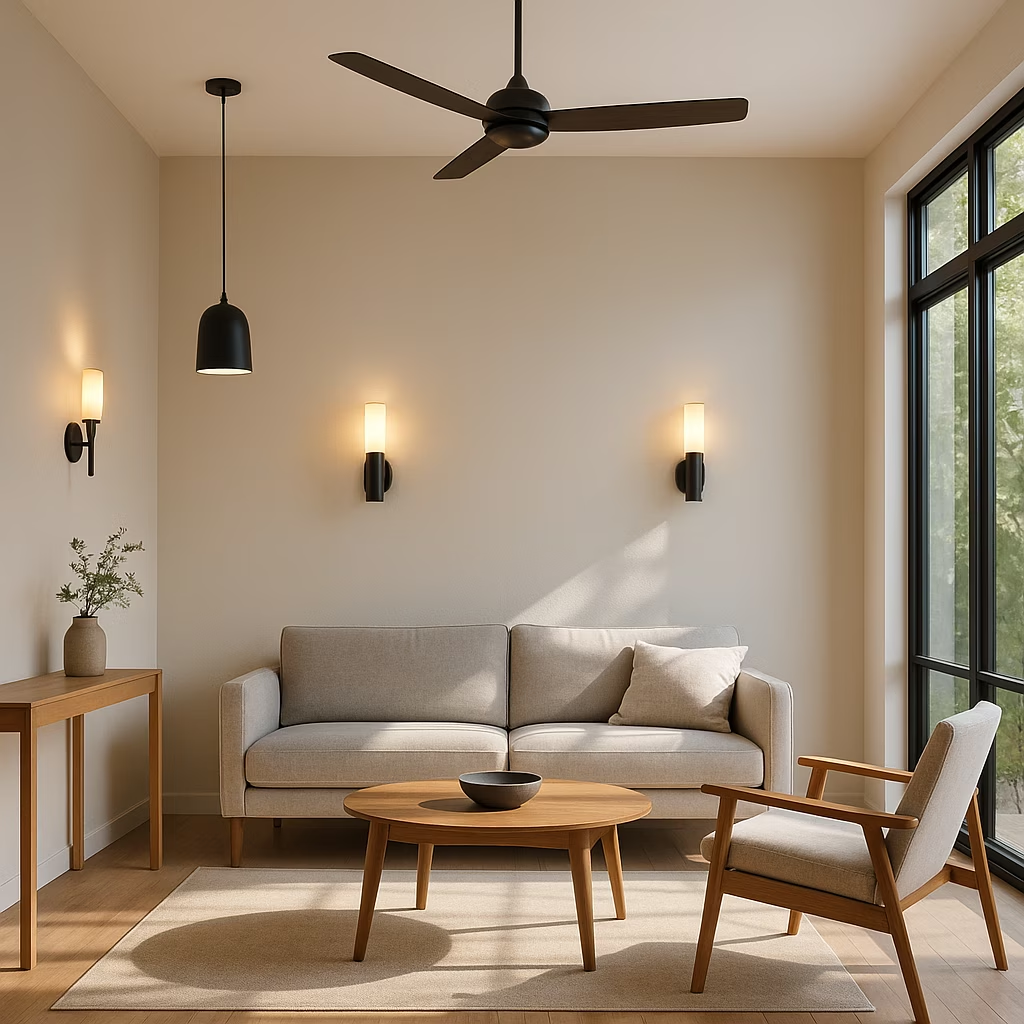
In the quest for dramatic style, task lighting is often the first casualty. A stunning chandelier or sculptural pendant light might be the room's focal point, but it does little to illuminate the counter where you're wielding a sharp knife or checking if the chicken is cooked through. Relying solely on ambient lighting in a kitchen is like trying to read a novel by candlelight—atmospheric but ultimately impractical and potentially hazardous. Harty stresses that beautiful finishes cannot compensate for poor illumination, especially in a space where precision and safety are paramount.
The solution is a robust, layered lighting plan:
| Lighting Layer | Purpose | Examples |
|---|---|---|
| Ambient/General | Provides overall illumination for the room. | Recessed ceiling lights, flush mounts. |
| Task | Focuses light on specific work surfaces for safety and clarity. | Under-cabinet LED strips, pendant lights over an island. |
| Accent | Adds personality, style, and visual interest. | Sconces, interior cabinet lights, decorative ceiling fixtures. |
By combining these layers, you create a kitchen that is not only safe and highly functional for every chopping, stirring, and cleaning task but also warmly inviting and full of character when the work is done. In 2026, the most celebrated kitchens will be those that master this balance, proving that when design serves life beautifully, the result is always in style.
Comments